
Wisdom Teeth Extractions
Explore our range of oral surgery services designed to help you reach and maintain a healthy smile.
Wisdom Teeth Extraction - Your Questions, Answered
-
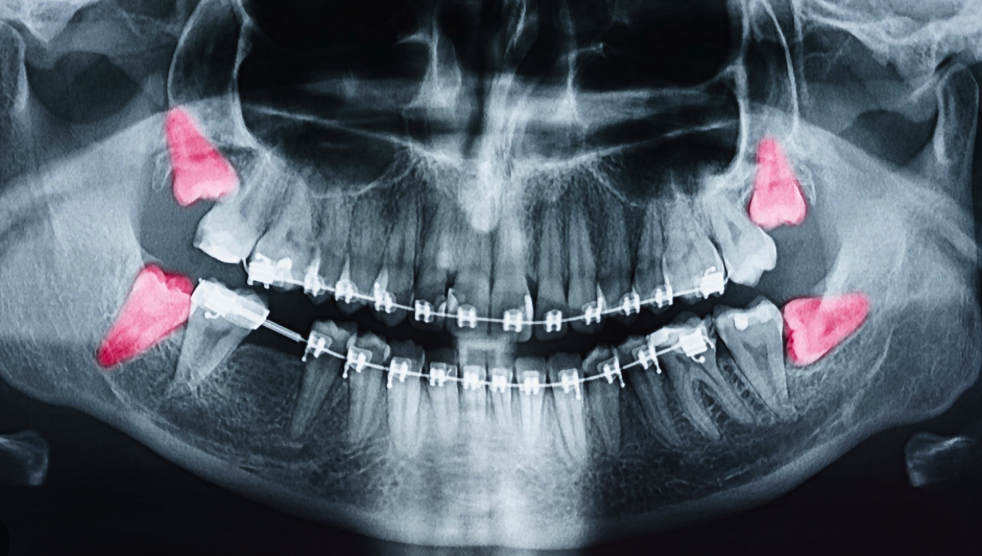
Wisdom teeth, or third molars, are the final set of teeth to emerge, typically one in each mouth quadrant. While most people have four, variations exist, with some individuals having fewer or none at all, which can be considered fortunate.
-
Not everyone requires wisdom teeth removal if their teeth align correctly. However, due to insufficient jaw space, many individuals need them removed to prevent potential damage. Improperly aligned wisdom teeth can lead to tooth, gum, and bone damage, infections, cavities, and discomfort. In rare cases, they might even cause cysts or tumors, threatening nearby nerves and structures.
-
Tooth Pain
Jaw Pain
Swelling, redness and Inflammation around the gums
Difficulty in keeping the area behind the second molars clean
Occasional swelling and bleeding
Impacted teeth
Frequent oral infections around the site of wisdom teeth
Cavities and decay forming on wisdom teeth
-
Infections
Irritation of the gum tissue in the back of the jaw
Difficulty with either bite or clenching
Overcrowding of teeth
Impacted wisdom teeth and deeper infection due to the wisdom tooth being stuck below the gum line.
Jaw Painscription
-
For optimal outcomes and minimal risks, the preferred age for wisdom teeth extraction spans from the mid-teens to the early twenties. During this time, the proximity of wisdom teeth to crucial nerves is less dangerous, and the roots are not fully developed, reducing the chance of nerve damage. Younger patients typically experience a smoother recovery, with reduced pain, swelling, and bleeding. Early removal can also aid orthodontic treatments, potentially improving overall dental alignment by preventing the crowding caused by emerging wisdom teeth. This preventative measure can significantly enhance oral health and orthodontic results.
-
Certainly, wisdom tooth extraction is a common procedure for patients of all ages, without any strict age limitations. The assessment of risks involves evaluating various factors, including tooth positioning, nerve proximity, and medical history. Age is considered among these factors that tailor a personalized treatment plan. During your consultation, Dr. Osmolinski will review your specific situation to provide a customized approach to your dental care needs.
-
While not every patient requires a bone graft following wisdom teeth extractions, the best way to determine your specific needs is through a personalized consultation with Dr. Osmolinski. During this visit, he will carefully evaluate your condition and develop a treatment plan tailored to support optimal healing and long-term oral health. Below are some reasons why bone graft would be recommended:
Wisdom teeth, or third molars, typically emerge between the ages of 17 and 25. Many individuals experience complications due to limited space in the mouth, leading to impaction, infection, and damage to adjacent teeth. Bone grafting can play a critical role in the successful removal of wisdom teeth for several reasons:
To preserve the Jawbone Structure
When a wisdom tooth is removed, the jawbone can deteriorate. This is because teeth help stimulate the bone through regular chewing and biting. Without this stimulation, the bone can begin to resorb or shrink over time. A wisdom tooth bone graft can help preserve the structure of the jaw by providing the necessary support for bone regeneration. This is particularly important if you plan to get dental implants.
Impacted or Severely Damaged Wisdom Teeth
Impacted wisdom teeth often require more invasive removal procedures that may involve cutting into the bone. In cases where the bone is damaged during extraction. A bone graft can be use to repair the area and promote healing. This ensures that the jawbone remains strong and intact.
Prevention of Complications
Dr. Osmolinski may recommend bone grafting as a preventive measure. Especially if they anticipate complications with healing. For instance, individuals with existing bone loss due to periodontal disease or other conditions may benefit from a bone graft to prevent further deterioration of the jawbone.
-
Yes, most patients can be sedated during their wisdom teeth extraction to ensure a comfortable and stress-free experience. We offer two safe and effective sedation options depending on your needs and level of anxiety.
Nitrous Oxide (Laughing Gas) is a mild form of sedation that helps you feel relaxed while remaining awake and responsive. It works quickly, is easily adjustable during the procedure, and wears off rapidly once treatment is complete. Many patients are able to drive themselves home afterward if no other sedatives are used.
IV Sedation (Twilight Sedation) provides a deeper level of relaxation. It is administered intravenously and allows you to feel very calm, with little to no memory of the procedure. IV sedation is ideal for patients with moderate to severe dental anxiety or for more complex extractions. Patients who choose IV sedation must fast for eight hours prior to surgery and will need a responsible adult to drive them home.
While sedation is safe for most healthy individuals, not everyone is a candidate. Patients with certain medical conditions (such as uncontrolled heart or lung disease), specific medication interactions, pregnancy, or a history of adverse reactions to sedation may not qualify. A thorough review of your medical history and current medications is always completed prior to scheduling sedation to ensure it is appropriate and safe for you.
During your consultation, we will discuss your health history, comfort level, and treatment needs to determine the best and safest option for you. Our goal is to make your wisdom teeth extraction as comfortable and worry-free as possible.
Your safety and comfort are our highest priorities. Please carefully review the following instructions to ensure a smooth procedure and optimal recovery. If you have any questions before your appointment, contact our office.
Before your surgery
Pre-op
-
Do not eat or drink anything for eight (8) hours prior to your scheduled appointment time.
This includes water, coffee, tea, gum, mints, and candy.You may brush your teeth the morning of surgery, but do not swallow any water or toothpaste.
If you were prescribed a pre-medication, take it as directed with a minimal sip of water only.
-
Please inform the doctor and assistant of all medications you are currently taking, including prescription medications, over-the-counter drugs, vitamins, and supplements. This information is extremely important for your safety.
-
A responsible adult (18 years or older) must bring you to your appointment, remain in the office for the full duration of your procedure, and drive you home.
We strongly recommend that someone stay with you for the remainder of the day.
If the patient is under 18 years of age, a parent or legal guardian must accompany them.
-
Wear loose, comfortable clothing.
A short-sleeve shirt is recommended (you may wear a jacket or sweatshirt over it)
Wear secure, closed-toe shoes (no sandals or flip-flops).
Wear minimal or no makeup.
No acrylic nails (if doing IV sedation).
Wear minimal or no jewelry.
Remove contact lenses prior to your appointment.
Bring AirPods or small headphones to listen to music (optional).
-
Smoking significantly increases the risk of surgical complications and delayed healing. Research shows that avoiding smoking for at least 24 hours before surgery can greatly reduce these risks. Please limit or refrain from smoking the day before and the day of your procedure.
-
Stock up on non-carbonated beverages and cold, soft foods such as applesauce, yogurt, ice cream, pudding, smoothies (no straw), and popsicles. Think soft, smooth consistency - similar to baby food. Click here for a list of foods to buy.
Avoid acidic foods and drinks (such as tomato or pineapple products) or things with seeds as they can get lodged into the extraction site.
Prepare ice packs in advance. Ice should be applied to the surgical area for the first 48 hours to minimize swelling and discomfort. Depending on your procedure, two to four ice packs may be recommended.
On the day of your wisdom teeth extraction, our goal is to help you feel calm, comfortable, and well cared for from the moment you arrive. If you have elected IV sedation (twilight sedation), you will be made deeply relaxed and likely remember very little of the procedure, while nitrous oxide (laughing gas) will help you feel at ease and comfortable throughout treatment while remaining awake. We will review your medical history, answer any last-minute questions, and ensure you are fully prepared before we begin. To best prepare, follow all fasting and pre-operative instructions, wear comfortable clothing, and arrange appropriate transportation if receiving IV sedation. Arriving with a calm, positive mindset is especially helpful - patients who are relaxed tend to respond even more smoothly to sedation. Our experienced team will guide you every step of the way to ensure a safe procedure and a smooth recovery.
Surgery Day
Proper post-operative care is essential for a smooth and comfortable recovery. The following instructions are designed to help minimize swelling, manage discomfort, and promote optimal healing. Please read them carefully and follow them closely. If you have any questions or concerns at any time during your recovery, our office is here to assist you.
After Surgery
Post-op
-
Aside from filling prescriptions, go directly home following procedure. Attempt to eat COLD and SOFT foods (milkshake/ frosty (eat w/ spoon), ice cream, etc.) and take your antibiotic and pain medications as soon as possible (*note: taking pain-meds on an empty stomach may cause an upset stomach or nausea).
Icing is very important during the first 48 hours to reduce the amount of swelling, use ice packs on the side of the face (20 minutes on, 20 minutes off, repeat continuously for the first 48 hours).
Bite on gauze packing over the extraction site(s), applying constant firm pressure, do not chew. Change gauze every 30-45 minutes for the next 4-6 hours only. It is better to continually bite on the gauze than to keep changing it every few minutes. Once the bleeding has significantly slowed (usually within 4 to 6 hours), you can stop using gauze entirely.
*Note that If gauze is left in place for too long or changed too frequently, it can disrupt the healing process in a few key ways:
Sticking to the Clot: As the gauze dries out, it adheres to the delicate blood clot forming in the extraction site.
Dislodging the Clot: When you remove the dried gauze, it can pull the protective blood clot out with it.
Exposing the Nerves: Removing the clot exposes the underlying bone and nerves in the socket, which is the definition of a dry socket.
Minor oozing or blood-tinged saliva is normal for up to 24 to 48 hours. If excessive bleeding occurs, contact our office as we may want to evaluate the site in person.
Use an extra pillow under your head while resting to remain in a propped-up position, refrain from lying flat while awake or sleeping for the first 48 hours following surgery. A neck pillow is a good way to keep head propped up and elevated. You may want to cover your pillows with a towel.
Consuming plenty of water and healthy food is important.
Avoid consuming alcohol, vaping, smoking or the use of tobacco products for at 7-10 days. . Alcohol acts as a blood thinner and can prevent the crucial protective blood clot from forming or cause an existing clot to dissolve prematurely, leaving the bone and nerves exposed. Moreover, the act of smoking can dislodge the blood clot which may cause dry-socket.
-
Staying on top of your pain medication is crucial for proper pain management. Some discomfort or pain is normal and should be relieved by the prescription medication.
Take the ibuprofen (Motrin 800mg) within an hour of getting home from surgery.
Take all medications with food to avoid stomach upset or nausea.
If prescribed, only use the narcotic (Tylenol 3 w/ Codeine) on an as-needed basis for pain. *No driving of lifting heavy machinery as this medication may cause drowsiness.
For maximum pain control, you can alternate the 800 mg of Ibuprofen (Motrin) with Acetaminophen (Tylenol 3 w/ Codeine) as prescribed. Keep track to make sure you are taking medications on time, not over-lapping and not exceeding the daily dose
*Complete the full course of antibiotics (Amoxicillin 500mg) 1 tablet every 8 hours for 7 days, or as prescribed.
Contact our office with any medication questions before taking additional medications.
-
Use a liquid diet the day of surgery and move towards a soft food diet the second day or as soon as can be tolerated. Whether liquid or soft food, it is highly suggested to stick with colder liquids and foods the first two days. Good options are: Ice Cream (no nuts or toppings), milkshakes/ frosty (eat w/ spoon), popsicles, applesauce, yogurt, Jell-O, pudding, or smoothies (with no fruit seeds).
Drink plenty of liquids from the start, but avoid the use of straws for two weeks as the suction can dislodge the clots at the surgical site, pull bacteria into the surgical sites or cause infections or dry sockets.
No carbonated beverages or alcohol for five days.
On the third and fourth day all food should be served at no warmer than room temperature. Hot foods, soups, or drinks can dissolve the blood clot. Good options are: scrambled eggs, mashed potatoes, soup broth, pastas (no tomato).
Stay away from small foods such as rice, small beans, or foods with seeds. These foods can easily become stuck in sockets. Avoid acidic foods, soups, or drinks (e.g., citrus fruits, ketchup).
At the five day mark you may advance your diet to a normal diet as tolerated. You may want to start out by cutting all solid food into small pieces.
-
For the first 24 hours, do not rinse your mouth. Resume brushing your teeth thoroughly but gently starting the night of the surgery. Use minimal toothpaste and refrain from using of commercial mouthwashes, as they may contain alcohol, which can delay initial healing.
After 24 hours, it is generally a good idea to gently swish with a warm diluted salt solution (1/4 teaspoon in 8 oz water). Rinsing vigorously may dislodge blood clots and interrupt the normal healing process.
3-4 days following surgery (usually when you start eating solid foods again), begin using supplied syringe to rinse out sockets following each meal and before bed. Syringe may be filled w/ Peridex mouth rinse, lukewarm water, or a half and half solution of the two.
-
Reduce your physical activities to avoid exertion that could reinitiate the bleeding or induce swelling. You should avoid exercise for 5 days post-surgery; no sports or going to the gym. Cardiovascular activity within the first 5 days can cause rebound swelling and bleeding, doubling your recovery time.
is advisable for the first 24–48 hours following surgery to have someone assist you when going from a lying to standing position. To help avoid becoming lightheaded or dizzy, rise slowly to a sitting position and sit for 30 seconds before standing.
Do not play musical instruments (e.g., trumpet, saxophone, horn instruments) for 10 days after surgery.
-
To minimize swelling, apply ice packs over the affected areas as soon as possible for 20 minutes on and 20 minutes off the day of the surgery until you go to bed that night. This is usually a 24-48 hour cycle. The swelling will not become apparent until the day following surgery and will not reach its maximum until 2–3 days postoperatively.
Anti-inflammatory medications, such as ibuprofen, as well as elevation of the head while you sleep for the first 2–3 nights after surgery, will help minimize swelling.
-
If a dry socket occurs (loss of blood clot from socket) there is constant paint that may radiate to other areas including ears, jaw and teeth. Symptoms of a dry socket do not occur until the 3rd r 4th day post-surgery. If you do not have improvements during the first few days following the procedure, call the office. A medicated dressing may be placed if pain medications do not resolve the discomfort.
To help prevent dry socket, avoid spitting, sucking from a straw, vigorous rinsing, sucking on the wound, drinking alcohol, vaping, smoking and exercising for 7 days after surgery.
-
A temperature greater than 101.5°F
Increasing pain or pain that does not improve with prescribed medication
(Please note: swelling and discomfort commonly peak on the third, fourth, and fifth days after surgery.)Persistent or recurrent nausea and vomiting after the day of surgery
Bleeding that is heavier than what was experienced on the day of surgery or bleeding that does not gradually decrease over time
If you experience any of the above symptoms, please contact our office promptly so we may provide appropriate guidance and ensure proper care.
Patient Education
To learn more about wisdom teeth extractions and the recovery process, we invite you to watch these brief videos. If you have any additional questions or would like to schedule a consultation, please contact our office, our dental team is always happy to assist you.
Why do I need my wisdom teeth removed?
Recovery Tips After Wisdom Teeth Extractions
Book an Appointment
Schedule your appointment with one of our dental specialists and experience the highest standard of personalized care. Our expert dental team is committed to supporting your journey towards optimal oral health and well-being.